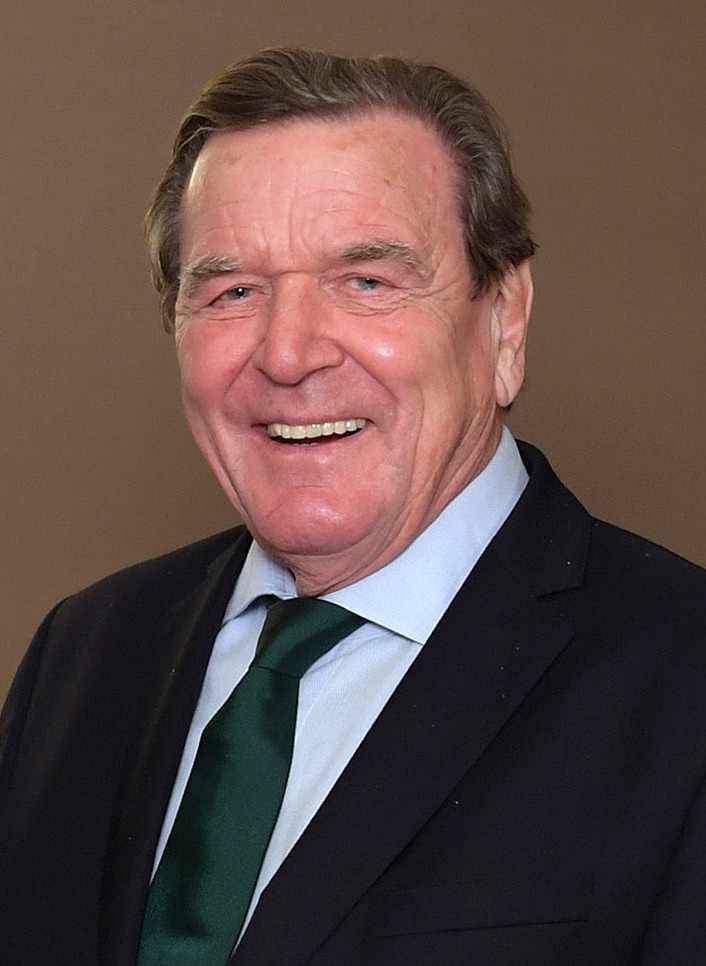
Scholz's Urgent Appeal: Germany's Chancellor Demands Schröder Quit Russian Company Posts
The political landscape in Germany is experiencing a significant tremor as Chancellor Olaf Scholz, leader of the Social Democratic Party (SPD), has publicly urged his predecessor, Gerhard Schröder, to relinquish his high-profile positions within Russian state-owned energy companies. This demand, echoing similar calls from within the SPD leadership, underscores a profound ethical and political dilemma facing Germany amid Russia's ongoing aggression in Ukraine. While the German public and political observers might inquire, "
Welches Amt Hat Gerhard Schröder Neu Geschaffen?" (Which office did Gerhard Schröder create anew?), it's crucial to clarify that Schröder did not create new governmental offices. Instead, he *accepted* remunerative roles in existing Russian corporations post-chancellorship, a distinction that forms the very core of the current controversy. These are not state-created "offices" in the traditional sense, but rather lucrative board and advisory positions that now cast a long shadow over Germany's foreign policy and ethical standing.
Scholz's direct challenge to Schröder, made during a prominent political talk show, highlights the gravity of the situation. He emphasized that holding a public office like that of a German Chancellor carries an enduring obligation that extends far beyond the term of service. This moral imperative, according to Scholz, dictates that a former head of government should avoid entanglements that could compromise the nation's integrity or public trust. The demand isn't merely a political maneuver; it's a profound statement about the ethical boundaries for former leaders and the need for Germany to present a united front against Russian aggression.
The Unprecedented Call: Scholz's Stance on Schröder's Russian Ties
The call from Chancellor Olaf Scholz for Gerhard Schröder to sever his ties with Russian state-owned enterprises marks an unprecedented moment in German politics. It signifies a clear break from any lingering perception of continuity in Germany's approach to Russia, especially given the severity of the conflict in Ukraine. Scholz's argument is rooted in a fundamental principle of public service: that the responsibilities of a former Chancellor do not simply vanish upon leaving office. "My advice to Gerhard Schröder is to withdraw from these offices," Scholz stated unequivocally. "This obligation does not end when one no longer exercises the offices, but it continues."
This sentiment resonates deeply within German political culture, where the legacy and moral compass of former leaders are held to a high standard. Schröder's current engagements are widely perceived as directly undermining Germany's diplomatic efforts and sanctions against Russia. Specifically, the concerns revolve around his roles at:
- Nord Stream AG and Nord Stream 2 AG: Both entities are responsible for the controversial gas pipelines linking Russia directly to Germany, bypassing Eastern European nations. Schröder serves as chairman of the shareholders' committee for Nord Stream AG and has been a vocal proponent of Nord Stream 2, which has since been halted due to Russia's invasion of Ukraine.
- Rosneft: As chairman of the supervisory board for the Russian state-owned oil giant, Schröder's position has drawn particular ire, given Rosneft's strategic importance to the Russian economy and its role in funding the state budget.
- Gazprom: Schröder was reportedly slated to take a supervisory board position at Gazprom, another cornerstone of Russia's energy sector. This prospective role further fueled the controversy, demonstrating a continued pattern of engagement.
These are not merely corporate positions; they are deeply intertwined with Russia's state power and geopolitical influence. For a former German Chancellor to hold such roles, especially with a regime currently engaged in an aggressive war, creates an undeniable conflict of interest and significantly erodes public confidence. The chancellor's insistence on Schröder's resignation is a clear attempt to restore Germany's moral authority on the international stage and ensure internal political cohesion in the face of external threats.
A History of Controversy: Schröder's Enduring Russian Connections
Gerhard Schröder's close relationship with Russian President Vladimir Putin is a matter of long-standing public record and controversy, dating back to his chancellorship from 1998 to 2005. Often described as a "personal friend" of Putin, Schröder's post-political career choices have consistently leaned towards deepening economic ties with Russia, particularly in the energy sector. This trajectory began remarkably swiftly after he left office, raising eyebrows and prompting questions about the ethical implications of a former head of government transitioning directly into roles serving a foreign state's commercial and strategic interests.
The criticism of Schröder intensified significantly with each new appointment to Russian state-owned companies. Critics argue that these roles not only offer substantial financial benefits but also serve to legitimize Russia's political agenda and contribute to its economic leverage over Europe. His advocacy for projects like Nord Stream 2, even as geopolitical tensions escalated, positioned him directly against the concerns of many European allies and raised suspicions about the independence of his judgment. While one might still ponder,
Welches Amt Hat Gerhard Schröder Neu Geschaffen, the reality is that his influence comes from leveraging the prestige and network of his *former* chancellorship for these existing, powerful Russian entities.
The current conflict in Ukraine has, however, transformed this long-simmering debate into an urgent crisis. What was once seen as questionable judgment is now viewed by many as an unacceptable betrayal of German and European values. Schröder's unwavering silence on Russia's actions and his continued adherence to his Russian posts have put the SPD, his former party, in an exceptionally difficult position. His refusal to condemn Putin's war or to resign from his positions makes him an outlier among Western leaders and former leaders, many of whom have unequivocally denounced Russia's aggression. This historical context illuminates why the current demands from Scholz and the SPD are not sudden but rather the culmination of years of growing discomfort, finally brought to a head by an undeniable act of war.
SPD's Ultimatum: Pressure from Within the Party
The demand from Chancellor Scholz is not an isolated incident but rather the highest-profile articulation of a mounting wave of pressure originating from within Gerhard Schröder's own political home, the Social Democratic Party (SPD). The party leadership, spearheaded by co-chairpersons Lars Klingbeil and Saskia Esken, had already sent a clear message to Schröder even before Scholz's public statement. In a strongly worded letter dispatched the previous Saturday, they formally urged him to relinquish his positions in Russian state-owned companies.
Klingbeil, speaking after a meeting of the SPD party executive, made it clear that the party expected a "timely" response from Schröder. While no specific deadline was publicly announced, the implication was unmistakable: the party was prepared to take further action if Schröder failed to comply. This internal pressure is critical, as it underscores the SPD's efforts to distance itself from its former leader's controversial ties, which have become an increasing embarrassment and liability for the party. The SPD, now leading the German government, is striving to present a unified and principled stance against Russian aggression. Allowing Schröder to maintain his roles undermines this effort and complicates Germany's foreign policy objectives.
The consequences for Schröder if he does not comply could be severe, ranging from a formal expulsion from the party – a drastic and rarely invoked measure – to a complete ostracization from all SPD activities and circles. For the SPD, the dilemma is acute: Schröder remains a highly symbolic figure, a former Chancellor who modernized the party and implemented significant reforms. However, his current actions threaten to overshadow his legacy and inflict lasting damage on the party's image. The internal struggle reflects a broader societal debate in Germany about the boundaries of loyalty, national interest, and personal gain, especially for those who have held the highest offices. The party's demand serves as a critical test of its own resolve and its commitment to ethical leadership in a time of international crisis.
Gerhard Schröder Faces Pressure Over Russian Energy Roles,
SPD Demands Schröder Cut Ties with Russian Corporations.
Beyond the Headlines: Ethical Considerations for Former Leaders
The case of Gerhard Schröder serves as a stark illustration of the complex ethical landscape that former heads of state and government navigate. While the question, "
Welches Amt Hat Gerhard Schröder Neu Geschaffen?" can be definitively answered as "none" in the governmental sense, the acceptance of influential and lucrative roles in foreign state-owned enterprises raises profound questions about post-office ethics.
The core of the issue lies in the concept of *public trust* and the *enduring obligation* that Scholz highlighted. When an individual holds the highest office in a nation, they accumulate a vast network of contacts, confidential information, and a level of prestige that doesn't simply evaporate upon retirement. Leveraging these assets for personal financial gain, particularly from governments that may have conflicting interests with one's home country, creates several ethical quandaries:
- Conflict of Interest: Even if no direct laws are broken, the appearance of a conflict of interest can undermine public faith in the integrity of government. There's an inherent suspicion that decisions made while in office might have been influenced by future career prospects.
- Undermining Foreign Policy: A former leader acting as an advocate or lobbyist for a foreign state, especially an adversary or a nation under sanctions, can directly contradict and weaken their own country's diplomatic efforts.
- Compromising National Security: Access to sensitive information during one's tenure can be exploited or inadvertently exposed in post-political roles, even if unintended.
- Erosion of Democratic Values: When leaders transition seamlessly into roles that serve authoritarian regimes, it blurs the lines between democratic governance and state-controlled capitalism, potentially eroding the values they once pledged to uphold.
Practical Tips and Insights for Ethical Post-Political Careers:
Governments around the world have attempted to address these challenges with varying degrees of success:
1.
"Cooling-Off" Periods: Many countries impose mandatory "cooling-off" periods, during which former officials are prohibited from lobbying or working for entities they regulated or interacted with extensively while in office. While effective for mid-level officials, extending these periods significantly for top leaders could also be considered.
2.
Independent Oversight Bodies: Establishing independent ethics commissions to review post-political employment opportunities for former heads of state could provide an impartial assessment of potential conflicts.
3.
Transparent Disclosure Requirements: Mandating comprehensive public disclosure of all post-office income, lobbying activities, and foreign engagements would allow for greater public scrutiny and accountability.
4.
Reinforcing Ethical Codes: Political parties and parliamentary bodies could establish clearer, more stringent ethical codes specifically for former leaders, emphasizing that the prestige of the office carries permanent responsibilities.
5.
Promoting Public Service: Encouraging former leaders to transition into roles that genuinely contribute to public good (e.g., charity work, academic positions, international diplomacy for non-controversial causes) rather than corporate or foreign state-sponsored roles.
The Schröder case highlights the urgent need for a robust and internationally agreed-upon framework for post-political careers, particularly for individuals who have held the highest public trust. The globalized nature of commerce and politics means that the actions of a former leader in one country can have profound implications for international relations and the ethical standards of leadership worldwide.
In conclusion, Chancellor Olaf Scholz's demand for Gerhard Schröder to resign from his Russian company posts is a pivotal moment for German politics and a critical test of ethical leadership. While Schröder did not "create new offices" (
Welches Amt Hat Gerhard Schröder Neu Geschaffen), his acceptance of influential roles within existing Russian state-owned energy corporations, especially amidst the war in Ukraine, has sparked a profound debate about the enduring obligations of former heads of state. The pressure from Scholz and the SPD underscores a clear shift in Germany's stance towards Russia and a renewed emphasis on moral integrity in public service. The outcome of this confrontation will not only shape Schröder's legacy but also set an important precedent for the ethical conduct expected from former leaders on the international stage.